BY WILSON KUTAMBA
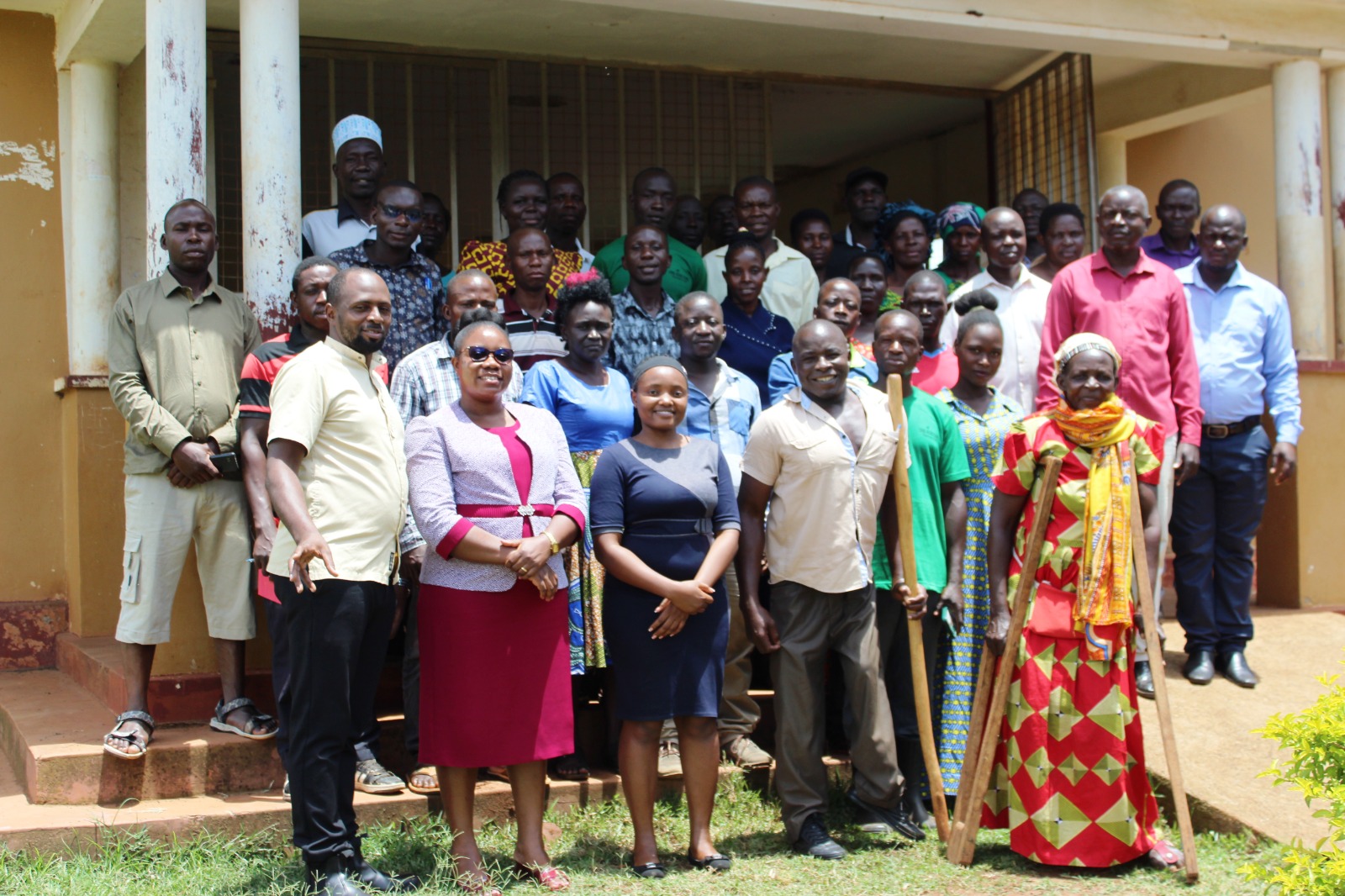
In the sun-baked fields of Mbulamuti sub-county in Kamuli District, eastern Uganda, a group of smallholder farmers, women and youth sat under makeshift shade last week, notebooks in hand, absorbing lessons that could mark a turning point in their struggle against grinding poverty.
The two-day workshop, organised by Makerere University’s College of Business and Management Sciences (CoBAMS), forms part of a community-driven project titled “Empowering Communities for Poverty Reduction: Enhancing Financial Literacy and Entrepreneurship Skills to Promote Savings and Economic Growth”, funded by Government of the Republic of Uganda through the Makerere University Research and Innovation Fund (Mak-RIF).
It aims to equip residents of Kamuli and Buyende districts with practical skills in financial management, business planning, market identification and agricultural enterprise development tools many hope will help break the cycle of subsistence farming and low incomes.
The initiative reflects Makerere University’s push to translate academic research into tangible community impact, moving beyond lecture halls to address real grassroots challenges in one of Uganda’s most persistently poor regions.

Busoga region has long grappled with entrenched poverty, despite its fertile soils and proximity to major markets. Historical data from the Uganda Bureau of Statistics (UBOS) consistently placed Busoga among sub-regions with the highest poverty incidence, with many households earning less than UGX 100,000 monthly.
Children attend Universal Primary Education (UPE) schools but frequently drop out because parents cannot afford basic lunch fees or other small charges. Psychosocial barriers such as poor money management habits have further undermined progress.
Government interventions, including the Parish Development Model (PDM), Youth Livelihood Programme and similar schemes, were designed to inject capital and shift households from subsistence to the money economy. Yet, in districts like Kamuli and Buyende, these programmes have often fallen short.
Beneficiaries have frequently misused funds on non-productive activities, including alcohol consumption or other personal expenses, while weak financial literacy and mindset issues have limited sustainable impact. Recent reports have highlighted mismanagement, diversion of funds and low recovery rates in parts of Busoga, leaving many communities sceptical about top-down cash transfers without accompanying skills.
It is against this backdrop that Makerere University stepped in. Paddy Ainebyona, the overall project coordinator, said initial research and consultations with district leaders revealed that Kamuli and Buyende share similar geographic and demographic profiles, making them ideal for targeted intervention.
“After engaging district leaders during data collection, we focused on Mbulamuti sub-county in Kamuli because it represents the broader challenges in the area,” Ainebyona explained. “Our findings showed high poverty indices, low incomes, and difficulties in utilising government programmes effectively due to psychosocial challenges in handling money and limited enterprise skills.”
Ms. Namujjuzi Sylivia, the Principal Investigator and assistant lecturer at Makerere University, Department of Accounting and Finance, School of Business COBAMS, stressed the project’s core philosophy: university research must respond directly to community needs.
“Our goal is not only to generate knowledge but to ensure it benefits communities on the ground. We are building skills in business planning, financial management and enterprise development so residents can improve their livelihoods,” she said.
The training sessions, conducted in local dialects for better accessibility, were deliberately practical. Participants learnt how to develop business plans, keep proper records, identify viable market opportunities, adopt high value crops and add value to agricultural produce.
Decent Arinda, Project Administrator, noted that the workshop followed extensive baseline data collection.
“We are not just delivering training; we are equipping people with knowledge that can translate into real income generating activities. The participants are eager to apply these skills in agriculture, trade and small businesses,” Arinda said.

Ainebyona, who handled the agriculture enterprise development module, encouraged farmers to move beyond traditional crops.
“We taught them to adopt high value crops and add value to their produce to boost incomes. In the next implementation phase, we will support practical application of these ideas,” he added.
Mutesi Mary, a trainee, said the bookkeeping component stood out.“We applaud Makerere University for bringing this project to Kamuli. Most of us, especially women, have never kept proper records. We are going back home to implement everything we have learnt,” she told this publication.
Sulywe Charles, another participant, linked the training to broader governance issues. “Kamuli receives funds through the Parish Development Model and other programmes, but many beneficiaries misuse them spending on things like marrying more wives or drinking alcohol instead of building sustainable livelihoods. What people need most is mindset change. We ask Makerere University to extend more such projects across the Busoga region,” he urged.
The project, which started in May 2025 and is scheduled to run until May 2026, has exhausted its current budget for the training phase. Leaders are now seeking additional funding to support the critical implementation stage, including mentoring, practical demonstrations and direct enterprise support.
By promoting savings culture, better financial management and community collaboration, the initiative seeks to strengthen local economic networks and help residents make better use of existing government programmes.
As Busoga continues its long battle against poverty, the partnership between Makerere University and these rural communities highlights the potential of academic institutions to drive meaningful grassroots transformation. Success will be measured not in workshops held, but in visible changes in the fields and homes of Mbulamuti and beyond.