By Entebbe Post
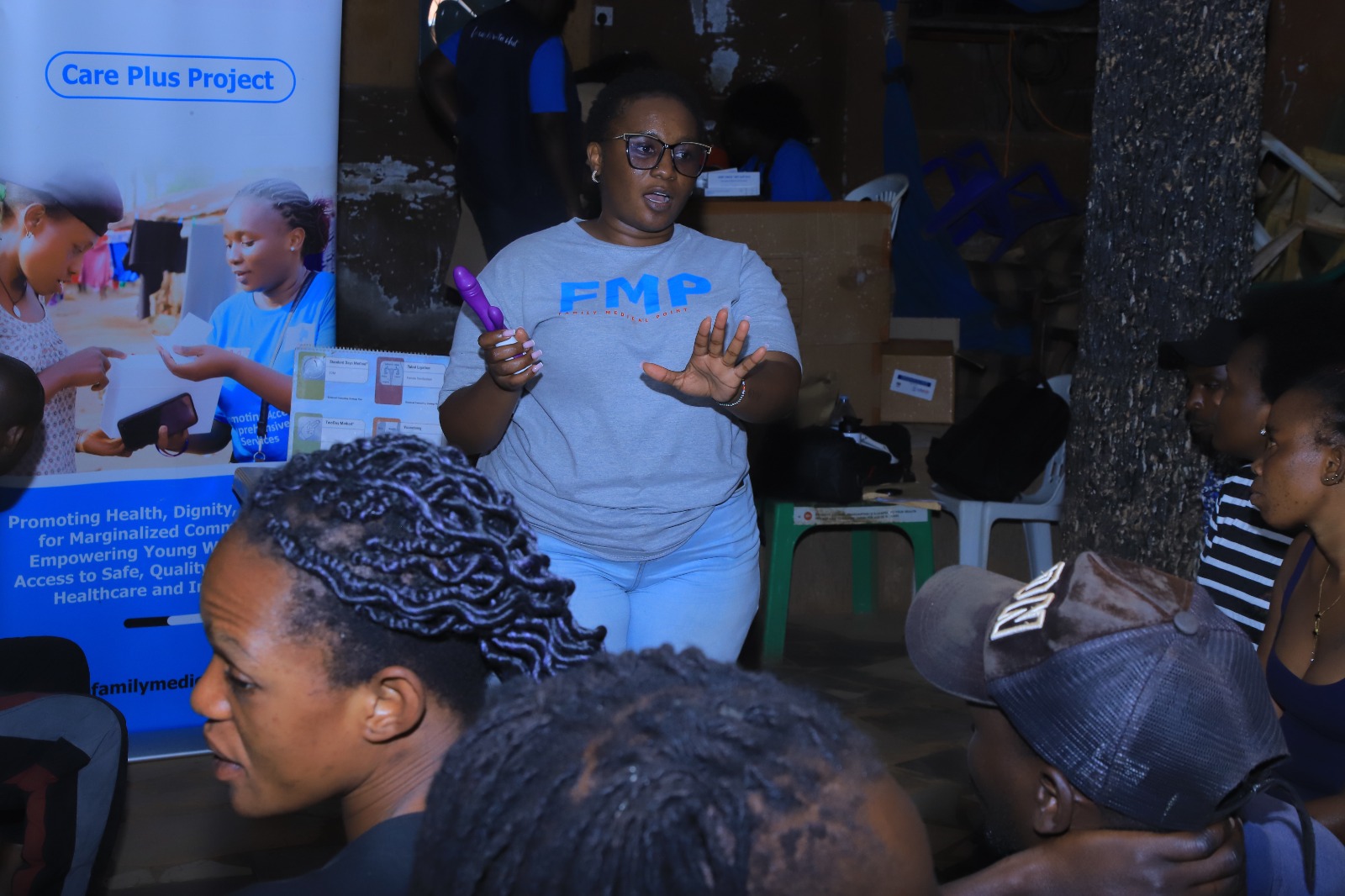
Family Medical Point (FMP), a civil society organisation promoting sexual and reproductive health and rights (SRHR), on July 23, 2025, conducted a community outreach session in Nakiwogo, Entebbe Municipality, aimed at supporting sex workers with health education and services.
The activity, known as the Musawo Session, attracted 112 sex workers from Nakayiza Estates and surrounding areas in the Nakiwogo fishing community. The session provided HIV testing, family planning, mental health support, and access to condoms, among other SRHR services.
According to Polyne Nabwire, the Head of Programmes at FMP, the Musawo Session is a model designed to create a safe and supportive space where women and girls—particularly sex workers—can receive accurate health information and access essential services without stigma.
“Fishing communities like Nakiwogo face unique vulnerabilities,” she said. “This includes high rates of transactional sex, poor access to healthcare, and limited condom supply. Through the Musawo Session, we bring services closer to people who need them most.”
FMP reported that during the one-day activity:
• 52 sex workers tested for HIV,
• 94 individuals accessed other SRHR and family planning services,
• 9,000 condoms were distributed to community members.
However, Nabwire noted that despite the large distribution, demand for condoms far exceeded supply.
“We witnessed women scrambling for boxes. Many told us they often go without protection because they can’t afford condoms, which are sometimes resold at high prices even when labeled ‘Government of Uganda – Not for Sale,” she explained.
Nakiwogo and other Lake Victoria landing sites such as Kigungu, Kasenyi, and Kasensero have long been identified as high-risk communities for HIV transmission. Studies show that HIV prevalence in fishing communities ranges between 22% and 29%, nearly four times the national average.
FMP attributes part of the current condom shortage to funding cuts resulting from the reinstatement of the Global Gag Rule in early 2025. This U.S. policy has affected several non-governmental organisations in Uganda that provide reproductive health services, leading to reduced condom supplies and fewer outreach activities.
According to Moses Odongo, Executive Director at FMP, the shortage is not just logistical, it is also linked to stigma and a lack of targeted government attention.
“Sex workers told us they often have to choose between buying a meal and buying condoms,” Odongo said. “The government has made progress in HIV prevention nationally, but communities like Nakiwogo remain underserved.”
He added that FMP now prioritises giving condoms directly to individuals, especially sex workers, instead of lodging facilities or brothels, where free condoms are often commercialized.
FMP called on the Ministry of Health and development partners to ensure a consistent condom supply, increase targeted outreach to fishing communities, and support peer-led health education models to reduce stigma and risk.
“The health and dignity of all Ugandans, regardless of their profession or location, must be protected,” Nabwire emphasized.