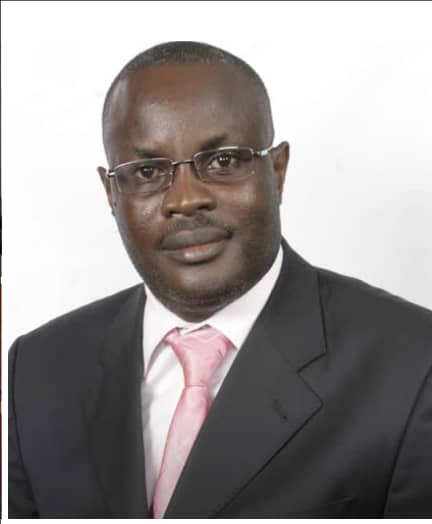
_By Fredrick ES Mutengeesa_
Uganda’s contemporary political landscape presents a paradox that has become increasingly difficult to ignore.
While the country formally operates under a multiparty democratic system, the substance and effectiveness of opposition politics have steadily eroded.
This erosion is not merely the result of state repression or the dominance of the National Resistance Movement (NRM), but also a consequence of deep internal weaknesses within the opposition itself—manifested through fragmentation, ideological inconsistency, and a troubling shift from public interest to personal political survival.
This crisis has profound implications not only for democratic accountability but also for the Ugandan taxpayer, who ultimately bears the financial and social costs of political dysfunction.
*Historical Context: The Evolution of Opposition Politics in Uganda*
Since the NRM assumed power in 1986, Uganda’s opposition has passed through several distinct phases.
In the early post-1986 period, political pluralism was formally suspended under the “Movement” system.
During this time, opposition politics survived largely through individual actors and historical parties such as the *Democratic Party (DP* ) and the *Uganda People’s Congress (UPC* ), whose activities were constrained but not entirely extinguished.
The late *Dr Paul Kawanga Ssemogerere* , leader of the DP, represented a model of principled opposition rooted in constitutionalism, dialogue, and institutional engagement.
His leadership during the Constituent Assembly debates of the 1990s and subsequent elections offered a vision of opposition politics grounded in national interest rather than political expediency.
The return to multiparty politics in 2005 marked a turning point.
*Dr Kizza Besigye’s* challenge to the NRM—beginning in 2001 and later institutionalised through the *Forum for Democratic Change (FDC* )—introduced mass mobilisation, electoral contestation, and sustained critique of militarisation, corruption, and governance failures.
This period saw the emergence of structured opposition cooperation through arrangements such as the *Inter-Party Cooperation (IPC* ) and later *The Democratic Alliance (TDA* ), reflecting a shared understanding that unity was indispensable in confronting an entrenched ruling party.
More recently, the rise of *Robert Kyagulanyi Ssentamu* and the *National Unity Platform (NUP* ) transformed opposition politics by mobilising youth, urban populations, and politically marginalised groups.
NUP’s rapid electoral success in the 2021 general elections made it the largest opposition party in Parliament—an unprecedented development for a relatively new political organisation.
Yet numerical strength has not translated into strategic coherence.
*Fragmentation and the Collapse of Collective Opposition Identity*
In mature democracies, opposition parties may compete among themselves, but they retain a shared commitment to defending democratic space, institutional accountability, and civil liberties. In Uganda, this collective identity has increasingly collapsed.
Opposition parties now frequently operate as isolated entities, with limited coordination and, in some cases, overt hostility toward one another.
Alliances that once symbolised unity against authoritarianism have either disintegrated or been reduced to transactional arrangements lacking ideological substance.
Most concerning is the absence of a clearly articulated *common adversary* or shared *reform agenda* .
While all opposition actors nominally oppose the NRM, in practice much political energy is expended on internal rivalries. This dynamic has created a situation in which opposition parties simultaneously claim victimhood while actively undermining fellow opposition actors.
Such behaviour erodes public confidence and reinforces perceptions that opposition politics is driven less by national transformation and more by competition for visibility, resources, and influence.
*The Office of the Leader of the Opposition: From Institution to Symbol*
The Ugandan Constitution and parliamentary practice recognise the *Leader of the Opposition (LoP* ) as a critical democratic institution.
The LoP is expected to provide oversight, articulate alternative policy positions, coordinate opposition activity, and act as a unifying figure within Parliament.
However, the increasing dominance of a single opposition party has blurred the distinction between *party leadership* and *institutional responsibility* . Instead of fostering inclusivity and pluralism within the opposition, the LoP function has, at times, been perceived as partisan, exclusionary, and intolerant of dissenting opposition voices.
When the largest opposition party in Parliament begins to marginalise other opposition actors, restrict debate, or monopolise political legitimacy, the very concept of opposition loses coherence. Opposition ceases to function as a democratic counterweight and instead reproduces the same centralising tendencies it claims to oppose.
*Ideological Drift and the Absence of Policy Coherence*
Another defining feature of Uganda’s opposition crisis is the *erosion of ideological clarity* . Political parties increasingly struggle to articulate coherent policy alternatives grounded in economic, social, and institutional reform.
Manifestos often emphasise rhetoric over substance, and alliances are formed without a shared philosophical foundation.
This ideological drift weakens the opposition’s credibility as a government-in-waiting.
Without clear policy positions on taxation, public expenditure, service delivery, and institutional reform, opposition politics becomes performative rather than transformative.
*The Ugandan Taxpayer: Financing Political Dysfunction*
At the centre of this crisis stands the Ugandan taxpayer—systematically overlooked yet indispensably involved.
Public funds finance Parliament, political party activities, electoral processes, and state security operations.
Every parliamentary impasse, every failed alliance, and every internal political conflict is ultimately underwritten by citizens struggling with rising living costs, unemployment, and declining public services.
The taxpayer is therefore not a passive observer but an unwilling financier of political inefficiency. While political elites—both in government and opposition—continue to receive salaries, allowances, and privileges, ordinary Ugandans bear the consequences of stagnation and misgovernance.
A troubling pattern has emerged in which segments of the opposition appear increasingly detached from the material conditions of the population. Political engagement becomes a pathway to personal advancement rather than a platform for collective liberation. In such a context, opposition politics risks becoming indistinguishable from the system it purports to challenge.
*Conclusion: A Call for Ethical and Institutional Renewal*
Uganda’s democratic deficit cannot be resolved by changing political actors alone; it requires a fundamental reorientation of political purpose. The opposition must rediscover its role as a *public institution* , not a collection of competing personal projects.
*This demands* :
Recommitment to unity based on shared democratic principles
Restoration of ideological and policy clarity
Respect for pluralism within opposition ranks
Genuine accountability to the taxpayer as the primary stakeholder
Without this renewal, opposition politics will continue to fragment, public trust will further erode, and the burden on ordinary Ugandans will intensify.
History demonstrates that political change is not merely about numbers or popularity, but about discipline, integrity, and purpose. Uganda’s opposition must choose whether it wishes to be remembered as a force for national transformation or as a cautionary example of squandered opportunity.
*The taxpayer deserves better* .
*Democracy demands better* .
*And Uganda’s future depends on it* .
By Fredrick ES Mutengeesa