Entebbe, Uganda
Group-based psychosocial interventions are improving depression among people living with HIV in Uganda, but not for everyone. New research published in Wellcome Open Research shows that one in three participants remained depressed six months after treatment, highlighting a critical gap in how mental health care is currently delivered within HIV services. The studies go further to identify how recovery happens and why some people are consistently left behind.
Uganda is committed to integrating mental health into HIV care, with national frameworks, including the Consolidated Guidelines for Prevention and Treatment of HIV and AIDS and the National HIV and AIDS Strategic Plan, recognising depression as a key comorbidity and recommending psychosocial support within routine HIV services. In practice, however, these approaches are not yet fully aligned at the level of service delivery. Although the government has successfully operationalized Differentiated Service Delivery (DSD), tailoring care based on patient stability, this differentiation has largely focused on clinical treatment and service efficiency. Mental health support, by contrast, continues to be commonly delivered as standardised interventions, with limited guidance on how to adapt care based on a patient’s risk of persistent depression.
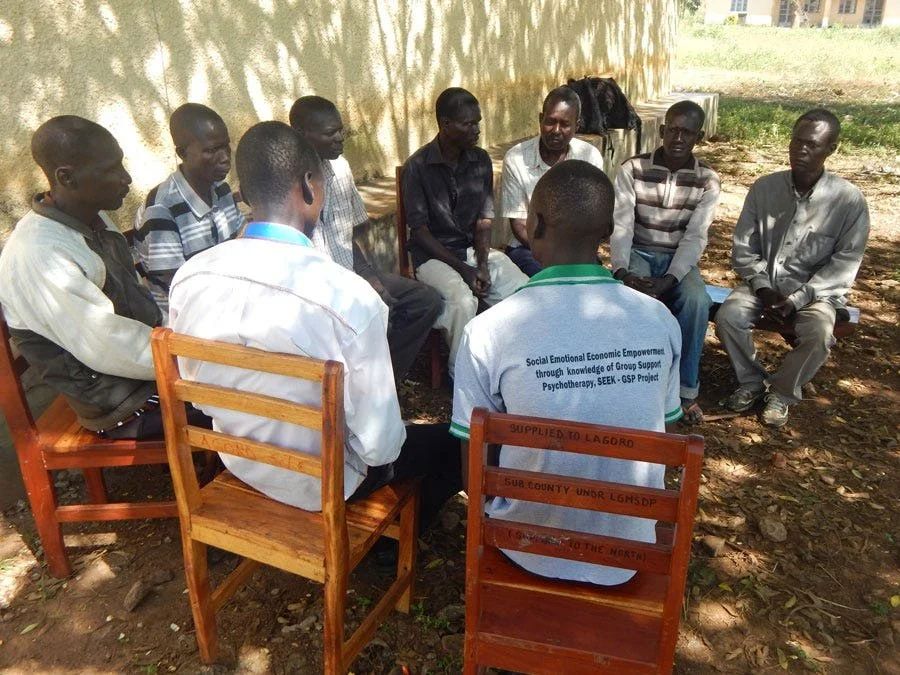
To address this gap, researchers at the MRC/UVRI and LSHTM Uganda Research Unit conducted two linked studies using data from a clinical trial of group-based interventions for depression among people living with HIV. One study examined how recovery happens over time, while the other focused on predicting which individuals are most at risk of remaining depressed after treatment.
The first study, the Early and Sustained Mediators of Depression Reduction Six Months Post-Treatment with Group Support Psychotherapy among People Living with HIV in Uganda, examined not only whether therapy works, but what changes during recovery. Recovery unfolded in stages.
Early in therapy, participants began speaking more openly about their experiences, accepting their situation and drawing on personal belief systems, including faith. These shifts were strongly associated with improvements in depressive symptoms, both during treatment and six months later.
As therapy progressed, participants developed more practical coping strategies, reduced self-blame, and became more open about their struggles. Social support strengthened, and those who began seeking emotional support during sessions were more likely to continue doing so beyond the intervention. This continuity of support appears to be central to sustaining recovery.
The second study, which focused on Development and External Validation of a Treatment-Adjusted Machine Learning Model for Precision Allocation of Group-Based Depression Care Among People Living with HIV in Uganda, used routinely collected clinical and social data to develop a predictive model estimating the likelihood of persistent depression after treatment. It found that individuals were more likely to remain depressed if they did not receive Group Support Psychotherapy (GSP), were older or widowed, had low income, lacked social support, experienced stigma, engaged in self-blame, or were not part of savings or community support structures.
Prof. Etheldreda Nakimuli, the Principal Investigator, emphasized that group-based approaches are not interchangeable.