BY WILSON KUTAMBA
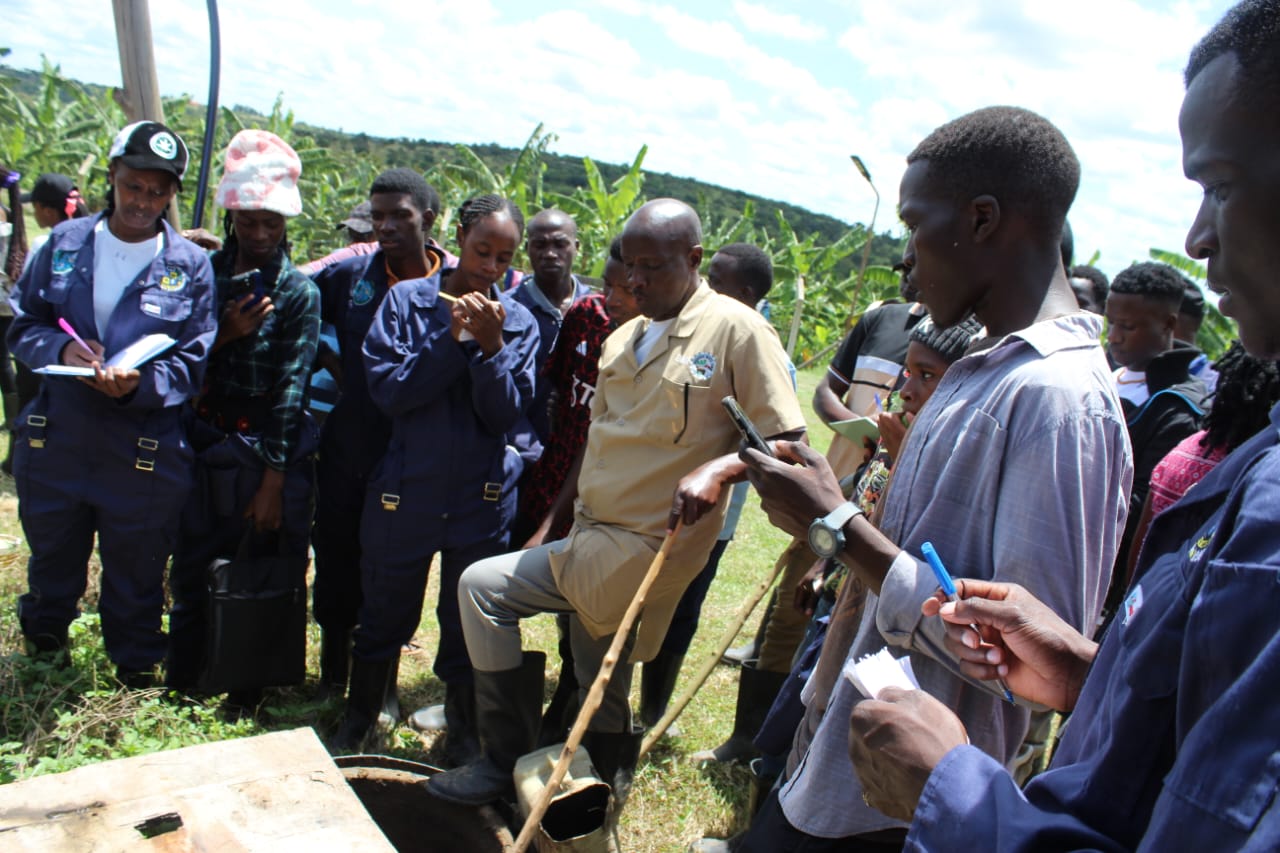
Lyantonde District, through its Production and Marketing Department, hosted approximately 90 students from Mbarara University of Science and Technology (MUST) for a one-day experiential learning tour on April 10, 2026.
The students, pursuing a Bachelor of Science in Agricultural Livelihoods and Farm Production under the Department of Environment and Livelihood Support Systems, visited Nsheshe Farm in Lyantonde Sub-county to bridge classroom theory with real world agronomic practices.
Senior Agriculture Engineer Paddy Ainebyona received the team and handed them over to Farm Manager Herbert Rwensheshe, who guided the students through the integrated mixed farming system.
The farm combines crop and livestock enterprises, creating a closed loop system where livestock manure supports soil fertility while crop residues and byproducts provide feed, enhancing overall farm resilience and resource use efficiency.
Students toured the livestock section, valley tanks for rainwater harvesting, a well managed Robusta coffee plantation, and associated crop fields.
Rwensheshe explained that Nsheshe Farm operates as a family owned enterprise where profits, after operational costs, are shared among family members, serving as a practical model for sustainable agribusiness and household livelihood improvement.
Eng. Ainebyona supplemented the explanations by highlighting key agronomic practices observed on the farm. He demonstrated the irrigation systems, including drip irrigation for targeted water delivery directly to the root zones of coffee plants, which minimizes evaporation losses and reduces weed pressure, and sprinkler irrigation for uniform coverage across larger areas.
These systems are particularly valuable in Lyantonde’s bimodal rainfall regime, helping farmers manage dry spells and optimize water use efficiency.
The students learned essential coffee agronomy techniques, such as mulching with organic materials like banana leaves and crop residues to conserve soil moisture, suppress weeds, regulate soil temperature, and build organic matter content. They also observed proper pruning and de-suckering practices that improve light penetration, enhance air circulation within the canopy, and lower the incidence of diseases like Coffee Wilt Disease.
Integrated soil fertility management was evident through the strategic use of well composted farmyard manure from the livestock unit combined with targeted mineral fertilizers to replenish nutrients removed during harvesting. Soil and water conservation measures, including contour bunds, terraces, and the valley tanks, effectively harvest runoff for supplemental irrigation while minimizing soil erosion on the gently sloping terrain.
Agroforestry elements, such as shade where bananas intercropped with coffee, further create a favourable microclimate, support nitrogen fixation where legumes are present, and diversify income sources.
Eng. Ainebyona urged the students to take detailed notes during the field practicum and prepare a report for the farm manager outlining their observations, areas of excellence, and constructive suggestions for improvement. “Such hands on field exposures are critical for students to internalize agronomic concepts by touching the soil, observing nutrient cycling, and appreciating irrigation efficiency in practice,” he said.
He added that as the government promotes a more practical curriculum in secondary schools, the National Council for Higher Education should enforce similar mandatory practicums across university programs in agriculture and all the fields.
Class Coordinator Ameria Namagga praised the warm reception and practical value of the visit. “We have interacted directly with many concepts we study in class, including integrated pest and disease management, water harvesting techniques, and sustainable livelihood systems. We sincerely appreciate Nsheshe Farm for this invaluable opportunity,” she noted.
Tadius Mujulizi another student said the group would consolidate their findings into a comprehensive report upon returning to the university. “In our presentations, we highlighted strengths such as the effective integration of livestock manure into crop nutrition and the efficient irrigation setups, along with suggestions for further improvement. We aim to deliver a detailed report with proposals that can guide future interventions on the farm,” he pledged.
Rwensheshe expressed gratitude to Lyantonde District and Mbarara University of Science and Technology for choosing Nsheshe Farm as a learning site. “I am delighted by this visit and look forward to receiving the students’ report, which will inform our ongoing efforts to enhance productivity, sustainability, and climate resilience on the farm,” he concluded.